
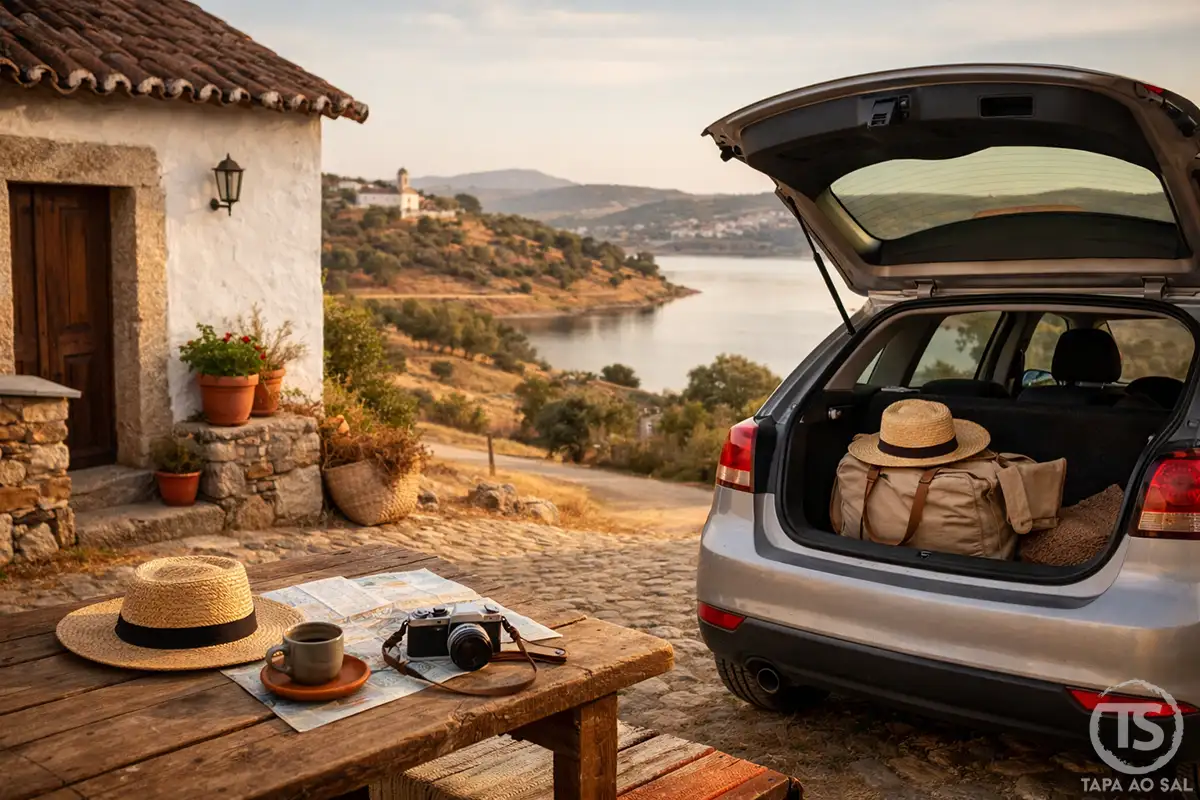

There is a side of Portugal that never appears on postcards or hurried itineraries.
It lives along secondary roads that wind through low hills and cork oaks, in villages where silence can still be heard, in beaches discovered after an unlikely bend, in reservoirs where the wind pushes small waves against banks of schist and red earth.
It was on these journeys — many of them without a rigid plan, guided only by a mental map and enough time to stop — that we began to understand how a car changes everything.
It changes the rhythm.
It changes the reach.
It even changes the way the country is seen.
Leaving the motorway, following a nearly faded sign, crossing a sleepy village in the middle of the afternoon, stopping because the light felt right, because the road asked for it, because the place called. Portugal reveals itself mostly in these in-between moments. In the detours. In what was never marked.
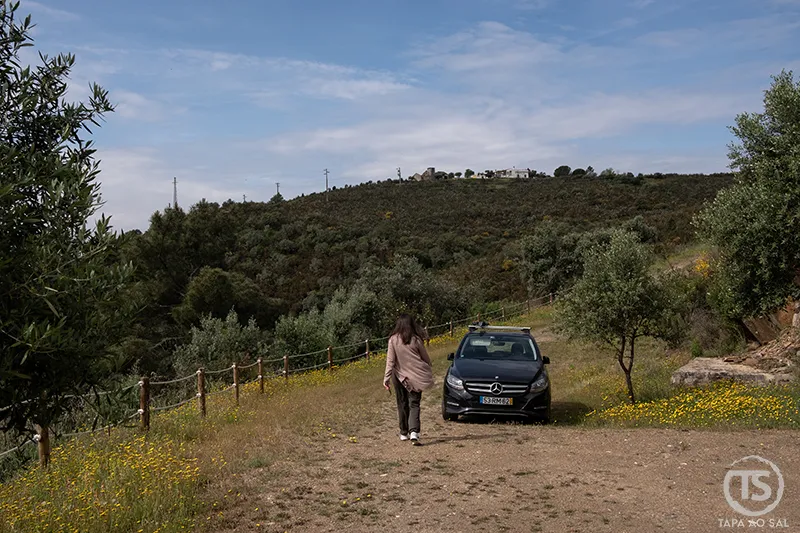
This is where renting a car in Portugal stops being a logistical detail and becomes part of the travel experience itself.
Not as a symbol of haste, but as a tool of freedom. To connect remote beaches in the Algarve, to climb Serra da Estrela while the mist still drifts through the valleys, to cross the Alentejo without schedules, to move through the islands where every viewpoint seems to demand its own time.
Over the years — between photography trips, articles, returns and first discoveries — we have gathered not only memories, but also practical learning. What makes things easier. What complicates them. What is worth understanding before arriving at the counter. What helps avoid surprises once the road begins.
This guide grows from that experience.
Not as a sales page, but as real support for those who are planning. To help understand how car rental works in Portugal, when it makes sense to rent, what the average costs look like, which precautions truly matter, and how to prepare this part of the journey with the same care used when choosing a destination.
Because often, it is in the space between two places that the journey truly happens.
Before deciding, it helps to understand when renting a car in Portugal truly makes sense.
Is Renting a Car in Portugal Worth It?
There are places in Portugal where the car feels almost invisible.
Lisbon at dawn, when the trams still creak alone along the hills. Porto in the late afternoon, with the Douro reflecting old façades and the sound of conversations replacing that of engines. In these cities, walking or taking the metro is often more than enough. The space is compact. The rhythm, urban. And the journey unfolds in cafés, viewpoints and narrow streets where a car adds little — and sometimes gets in the way.
But it only takes a few kilometres away for the landscape to change completely.
In the Algarve, for example, the country stretches out. Beaches stop being isolated points and begin to form a line of successive discoveries: a cove that reveals itself only after a dirt path, a stone arch best seen at the end of the day, a cliff where the wind carries a different temperature. Without a car, the Algarve becomes a handful of urban centres. With one, it transforms into an entire coastline to be travelled at the rhythm of the tide and the light.
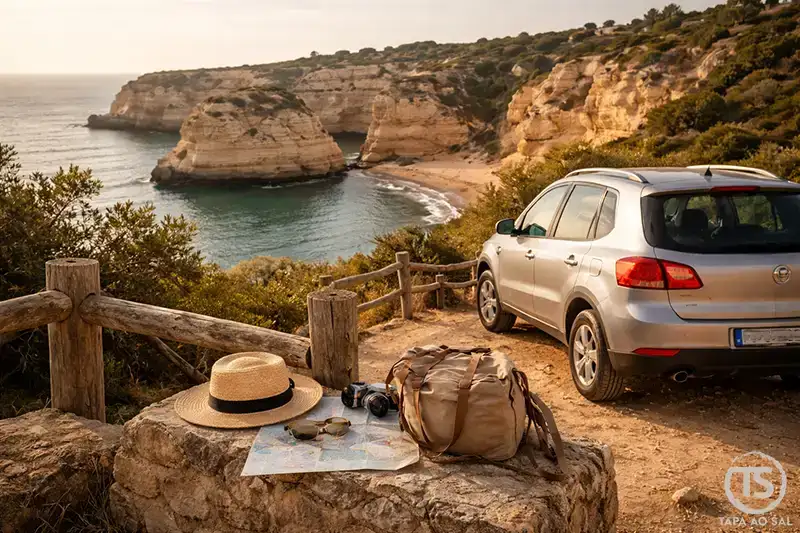
In the Alentejo, silence asks for distance. Villages are separated by wide fields, scattered olive trees, long straight roads where the horizon moves slowly. Here, renting a car in Portugal stops being a convenience and becomes a condition. To cross reservoirs, reach villages almost suspended in time, continue towards improvised viewpoints where only insects can be heard and the creak of the door as you step out of the vehicle.
In Serra da Estrela, the car becomes a kind of guiding thread. It connects valleys to plateaus, shepherds to lagoons, mist to sudden clarity. Without it, the mountain feels fragmented. With it, it gains continuity. It becomes possible to climb when the air still cuts through your breath, descend as the sun begins to gild the slopes, stop because a flock crosses the road or because the landscape simply demands it.
The same happens in the deep interior, where schedules are rare and destinations even more so. Or on the islands, where every curve seems to hide a world of its own. In Madeira, the road rises and falls as if drawn by hand. In the Açores, it circles craters, crosses pastures, approaches the sea from unlikely angles. Here, renting a car in Portugal is not only about moving from point A to point B. It is about choosing the path, the timing, the detour.
That does not mean the car is always the best option.
In historic centres, it becomes heavy. Streets narrow, parking turns into a game of patience, costs accumulate without much return. Some journeys gain more when taken slowly, with a folded map in the pocket and time to take the wrong street. In those contexts, renting may become more of a burden than a solution.
But when the journey asks for space, horizon and variation — when it asks for Portugal to be more than its cities — the car changes everything.
It changes the scale.
It changes the reach.
And above all, it changes the way the country offers itself to those who travel through it.
That is why the question “is it worth renting a car in Portugal?” rarely has a single answer. It depends on the type of journey you are looking for. On what you want to see. On what you are willing to miss. And on what you hope to gain in the space between one place and another.
When Renting a Car in Portugal Truly Makes a Difference
Some journeys are meant to be walked.
Others ask for the road.
When the plan is to cross regions, connect distant points, and seek what lies between them, the car stops being just a means of transport and becomes part of the narrative itself. A road trip through the Algarve, for example, is rarely written from a single place. It builds itself between cliffs and sandy stretches, between white villages and coastal roads where the scent of salt enters through open windows. Without a car, the coastline feels fragmented. With one, it gains continuity.
The same happens when the journey leans toward nature. Trails that begin far from any station, beaches reached after narrow paths, reservoirs hidden among hills, mountains where mist rises and falls throughout the day. In Serra da Estrela, in the interior of Alentejo or in the deep centre of the country, renting a car in Portugal is often the single gesture that transforms a map into real territory.
On longer trips, the car also sets a different rhythm. It allows early departures, unplanned stops, and returns at the end of the day along a different road. For those travelling with family, with equipment, with limited time or with the desire to avoid tight schedules, car rental in Portugal becomes more than convenient — it becomes liberating. Space expands. Fatigue is shared. Logistics simplify.
And then there is the journey of those who photograph. Those who chase light, wait for clouds, return to the same place because the wind has changed. There, the car is shelter, storage, a point of observation. It allows you to follow a smaller road when the main one no longer says anything. It allows you to stop because the landscape, quite simply, asked for it.
On the islands, this difference becomes almost physical. In Madeira, the roads climb like suspended balconies. In the Açores, they cross pastures, craters, places where time seems to move at another pace. Without a car, the island becomes a succession of points. With one, it turns into a continuous breath.
When You May Not Need to Rent a Car in Portugal
But not every journey asks for an engine.
There are trips that gain meaning when taken at the rhythm of footsteps. A short escape centred on Lisbon or Porto — lived between neighbourhoods, trams, viewpoints and riverbanks — rarely needs a steering wheel. The space is dense. Distances are short. The essential lies just minutes apart.
In these contexts, the car weighs down the experience. It searches for parking. It enters streets that do not want it. It adds costs where the city already offers metro, train, tram, ferry and a network of routes better explored without haste. For highly concentrated urban trips, renting a car in Portugal can become more noise than solution.
The same applies to very short journeys — one or two days — when the plan stays within a small radius. The experience is built more on being than on going.
That is why the decision is never absolute. It always begins with the type of journey you are looking for. With the space you want to cross. And, above all, with what you hope to find between one place and another.
How Renting a Car in Portugal Works
There is a very specific moment in almost every journey.
The one when the map stops being an idea and becomes a commitment.
Dates defined.
A flight booked.
A point of arrival.
It is at that moment that the question almost always appears: how do you rent a car in Portugal without turning this part of the trip into a field of traps?
Car rental in Portugal is, in truth, a simple process. But it is also one of those territories where simplicity can fade if everything is left until the last minute. Rushed counters, unclear conditions, poorly explained insurance, choices made under artificial light while people behind you sigh with impatience.
Booking in advance feels like preparing the journey at home, with a warm cup nearby and enough time to read without hurry. It allows you to compare offers, understand subtle differences between car categories, confirm fuel policies, excess amounts, pick-up times. Above all, it allows you to decide instead of reacting.
Today, much of this planning happens through comparison platforms. Not because they are essential, but because they help reveal the wider landscape: different rent-a-car companies, various pick-up locations, price ranges, insurance types, cancellation conditions. They work like a viewpoint before the descent.
It is in this role that we use tools like DiscoverCars — not as a destination, but as support. A place where options come together, needs can be filtered, and a reservation can be prepared before the journey begins to take real weight inside the suitcase.
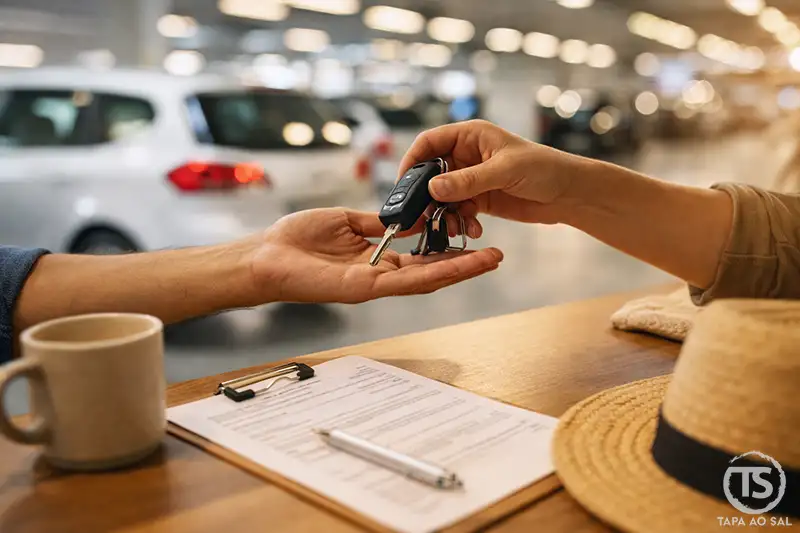
After the reservation, the next gesture is almost always physical. The counter at the airport, the small queue, the cooler air of the hall, the sound of rolling suitcases across the floor. The contract. The keys. And finally, the car park where dozens of vehicles wait under white light, each holding its own silent promise of a road ahead.
Here, the rental gains texture. It helps to observe, photograph, confirm. Small scratches, a mirror, the fuel level. Not out of distrust, but as a ritual — a way of starting the journey with clarity.
Returning the car, days later, is almost always lighter. Dust gathers around the wheel arches, a memory of toll roads remains, perhaps a grain of sand lost in the carpet. The key is handed back. The final receipt collected. And the road, which for days was horizon, becomes simply a road again.
In the end, renting a car in Portugal comes down to this: prepare in advance, choose calmly, pick up with attention, return with time.
Everything else — the curves, the detours, the silences — no longer belongs to the rental. They belong to the journey.
Where to Book When Renting a Car in Portugal: Counters vs Comparison Platforms
There are two very different ways to reach a car.
One happens in haste. Between automatic doors, glowing panels and queues that move in sudden bursts. The counter stands there — physical, immediate — with air conditioning set too high and an employee repeating the same phrases for hours. You choose what is available. You decide while tired. You sign because the road is waiting.
The other begins days, sometimes weeks, before the trip.
On a quiet screen. With time. With enough silence to read the small lines, compare offers, understand why one car costs less in one place and more in another. Booking in advance allows you to see the whole picture: prices, categories, fuel policies, excess values, coverage options. Above all, it helps avoid surprises when you are already far from home and too close to the clock.
That is why, when thinking about how to rent a car in Portugal consciously, comparison platforms naturally take on a role. They do not replace the road. But they work like that moment before a long descent, when you stop at a viewpoint to understand the terrain.
Tools like DiscoverCars fit here — not as a promise, but as a map. They gather multiple companies, different pick-up locations, price ranges and conditions. They give context. They make visible what, at the counter, usually appears fragmented. For those planning, they offer a way to choose with the mind before the body simply wants to arrive.
Renting a Car in Portugal: Freedom to Go Further
In Portugal, many of the most striking landscapes begin where public transport ends. Inland villages, hidden beaches, mountain roads and scenic viewpoints are part of a country meant to be explored with time and independence. Renting a car in Portugal turns the map into a conscious choice: deciding routes, adjusting rhythms, stopping where there are no stations. More than getting around, it is a way of shaping the journey.
Car Pick-Up and Return in Portugal
The pick-up is almost always the first physical contact with the journey.
In airports, the atmosphere carries its own acoustics: rolling suitcases, metallic announcements, doors that open by themselves. In urban centres, it feels quieter, more contained, as if the car were waiting within the rhythm of the city itself. In both cases, it helps to slow down. To breathe. To look.
Before turning the engine on, there are small gestures that make all the difference. Walking around the vehicle. Touching the mirrors. Bending slightly to look at the wheels. Photographing scratches, marks, small signs of use. Not out of distrust, but out of clarity. It is a simple ritual that saves explanations later.
Timing matters too. Arriving far outside the agreed period can turn a calm pick-up into a waiting game. Returning too late can add an entire extra day to the bill. Car rental in Portugal works best when time is treated as part of the agreement, not as a detail.
At the return, the feeling changes. The car already carries invisible kilometres. A scent it did not have before. Perhaps a little dust from the interior or salt along the rubber seals. The key is handed back, the condition confirmed, the final paper kept. And suddenly, the road is no longer ahead. It is behind.
Documents Needed for Renting a Car in Portugal
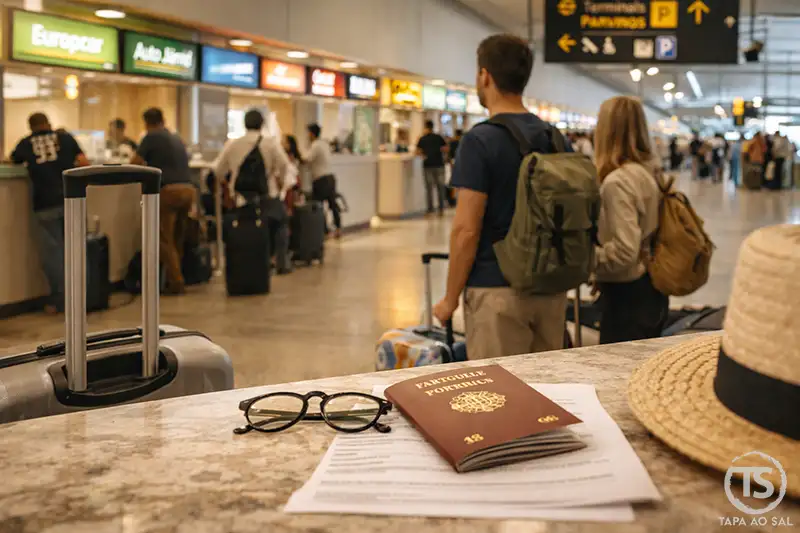
There is always a moment at the counter when the journey hangs between two hands.
On one side, the documents.
On the other, the keys.
To rent a car in Portugal, the essentials rarely surprise. A valid driving licence. An identification document. A card in the name of the main driver. Sometimes a minimum age that varies depending on the company and the vehicle category. Small details that may feel bureaucratic, but which in practice are what open or close the door to the road.
For those arriving from abroad, there are situations where an international driving permit may be requested, especially when the licence is not written in the Latin alphabet. Younger drivers may encounter additional fees. Those without a credit card may find more limited options. None of this stops the journey, but it can change the path towards it.
Having these elements prepared, accessible, prevents the beginning from being shaped by hesitation. It allows the moment when the key is received to be only that: a beginning. Not a negotiation.
And when the engine finally starts, everything left at the counter loses importance.
The contract. The papers. The hall.
What remains is the road.
Renting a Car in Portugal Cost: What to Expect
The price of a car, like the price of a journey, is rarely just a number.
It changes with the light.
With the season.
With the haste or calm of the person searching.
Asking how much it costs to rent a car in Portugal is a little like asking how much a night by the sea costs. The answer always depends on when you arrive, where you stop, and what you carry with you.
There are months when parking areas seem to breathe quietly. Others when cars become contested objects, lined beneath high sun, waiting for keys that arrive too late. Between these two extremes lies almost the entire spectrum of possible prices.
Average Car Rental Prices in Portugal by Season
In winter and early spring, when mornings still call for a jacket and the interior roads are crossed in silence, car rental in Portugal tends to feel lighter on the budget. Demand is lower, fleets remain available, and balanced offers can often be found even without much advance planning.
As the days grow longer and the country fills with voices, the landscape shifts. Summer — especially in the Algarve, in Lisbon, in Porto and on the islands — pushes values upward. Cars disappear faster. Simpler categories become the first to sell out. Long weekends, August weeks, festival seasons or international events create sudden peaks, almost always predictable for those who look ahead.
On the islands, this variation becomes even more visible. A full flight often means an empty parking lot. And when the lot empties, prices respond.
Creating realistic expectations begins with understanding this rhythm. Not as a threat, but as a kind of weather: those who travel with attention to the season choose more wisely when to open the window.
What Affects Car Rental Prices in Portugal
Some factors carry more weight than others.
Timing is one of them. Booking early does not always guarantee the lowest price, but it almost always guarantees choice. And choice, in car rental in Portugal, translates into flexibility — to adjust schedules, compare insurance, avoid categories that make little sense for the route ahead.
The pick-up location also matters. Airports concentrate supply, and that concentration tends to balance prices, though it may include specific fees. Urban centres can feel quieter but sometimes offer a more limited fleet.
The type of vehicle changes not only the base cost but also how it grows. A small car reacts less to demand. A family vehicle, an automatic or a four-wheel drive feels the weight of peak seasons more intensely.
Insurance is another quiet variable. Many offers seem light until coverage enters the equation. Here, more than searching for the cheapest option, it matters to understand what is included. A higher value may simply mean less friction later.
And then there are fuel policies, extras, additional drivers, child seats, unusual pick-up times — small details that, together, build the final price like thin layers across a map.
How to Save When Renting a Car in Portugal
Saving almost always begins before the journey.
Booking early, even with flexible cancellation, creates a starting point. It offers a reference. It allows the market to be observed with greater calm — and adjusted.
Flexibility helps more than it seems. One extra day or one less, a different pick-up hour, an alternative airport can significantly change an offer.
Comparison remains one of the simplest ways to avoid excess. Not to find miracles, but to understand what is normal. Comparison platforms exist precisely for that reason: to place side by side what would otherwise appear scattered. Prices. Conditions. Insurance. Transparency.
And then there is the quiet art of letting go of what does not serve the journey. Extras that do not match the trip. Categories above what is necessary. Solutions that feel comfortable but add little to the real path ahead.
Renting a car in Portugal is not a game of absolute minimums. It is an exercise in balance.
Between cost and peace of mind.
Between choice and urgency.
Between what is paid now and what is avoided later.
When that balance is found, the price stops occupying the centre. The road takes it back.
Car Rental Insurance in Portugal: Excess, Deposits and What to Know
There is a particular kind of silence that settles over rental counters when the conversation reaches this point.
Insurance, excess and deposits do not belong to the romantic imagination of travel, but they are part of its structure. They are what separates a calm detour from a heavy setback. Understanding them before you arrive is one of the most effective ways to protect not only your budget, but the rhythm of the journey itself.
Because renting a car in Portugal is rarely complicated. What complicates it, almost always, is what was never truly understood.
What the Excess Means When Renting a Car in Portugal
The excess is the invisible part of the contract.
The part you do not pay — unless you have to.
It is the maximum amount the driver assumes in case of damage or theft. It is not the cost of the car. It is the limit of responsibility. A ceiling. A number that hangs quietly while you drive along cobbled roads, tight parking spaces, windy beaches, historic centres where ancient walls stand close and mirrors pass dangerously near them.
In practice, it works like this: if damage occurs, that amount is the first to be called upon. It may be moderate. It may be significant. It depends on the vehicle category, the company, and the type of basic insurance included.
That is why many low daily prices carry their real weight here. The daily rate feels light, but the excess raises the risk. And risk, on a journey, is not only financial. It is mental. It shapes how you enter a narrow street. How you park. How you sleep.
Understanding the excess means understanding how much of the road becomes your direct responsibility.
When Additional Car Rental Insurance in Portugal Makes Sense
There are trips where additional insurance feels excessive.
And others where it becomes almost invisible, dissolved into the peace of mind it offers.
When the route stays on wide motorways, organised car parks and predictable urban centres, the basic coverage may be enough. But when the journey leans toward secondary roads, old villages, access tracks to beaches, improvised viewpoints or islands where wind and humidity meet low stone walls, the context changes.
A loose stone.
A branch.
A mirror that comes a little too close.
In these settings, reducing or eliminating the excess stops being a calculation and becomes a way of freeing attention. A way to look outward again instead of toward the steering wheel.
That is why, when thinking about car rental in Portugal, additional insurance should not be seen as an automatic cost, but as an adjustment to the type of journey. The type of road. The type of stops. The way you want to cross the country.
Renting a Car in Portugal Without a Credit Card: Is It Possible?
This is one of the most common questions — and one that asks for an honest answer.
Yes, there are situations where it is possible to rent a car in Portugal without a credit card. But they are fewer. And more restricted.
Some companies accept debit cards. Others allow alternatives when higher coverage is included. But in most cases, the credit card remains the most common way to secure the deposit — that amount you do not pay, but that remains temporarily suspended while the journey unfolds.
Without it, options narrow. Categories shrink. Conditions become more specific. It is not an absolute barrier. It is a funnel.
So rather than searching for exceptions, it helps to understand the system. The deposit is not a cost. It is a guarantee. A gesture of contractual trust that dissolves when the key returns to the counter.
Knowing this before departure avoids tense conversations. Avoids decisions made under fatigue. And above all, avoids the feeling of negotiating something that should have been clear long before.
Insurance, excess and deposits are the invisible foundation of the road.
When they are well understood, they disappear.
And when they disappear, space opens for what truly matters: driving without fear, stopping without calculation, travelling without noise.
Renting a Car in Portugal at Airports: What to Expect
Airports are often the first Portuguese ground a traveller steps onto.
The rhythm of the flight still lingers in the ears, the air conditioning clings to the skin, the body floats in an undefined time zone. Doors open. Light enters. And somewhere between conveyor belts and suspended signs appears the corridor of rent-a-car counters — a sequence of illuminated desks, discreet queues, people holding documents the way others hold maps.
Renting a car at Portugal’s airports is, for many travellers, the most direct way to turn arrival into departure.
The advantage is clear: everything is concentrated. Extended opening hours. Available fleets. Simplified logistics. The suitcase leaves the belt, the key leaves the counter, and the road begins without detours.
But there are small details that make a difference. Confirming hours when flights arrive late. Understanding whether the car park is inside or outside the terminal. Booking in advance, so the car exists when the body is too tired to improvise.
Here, car rental in Portugal takes on a kind of efficient neutrality. It is not yet the journey. But it is no longer waiting.
Renting a Car in Portugal: Lisboa and Porto Airports
Lisboa and Porto are cities that reveal themselves easily without a car. Compact, dense, crossed by metro lines, trams and trains. Arriving by plane and heading straight to a steering wheel is not always necessary, especially when the first days unfold within the urban fabric.
Many travellers choose to spend those first days on foot. Or by tram. Or simply by getting lost between neighbourhoods. And only later, when the journey asks for distance, do they return to the airport or collect the car elsewhere in the city.
Others prefer the immediate gesture: leaving the terminal and moving on. Crossing the Tejo right away. Heading toward the interior. Descending into the Alentejo. Climbing north. In those cases, renting a car in Lisboa or Porto becomes a seamless transition between arrival and movement.
In both cities, the flow is constant. The offer as well. Booking in advance becomes less about price and more about choice.
Renting a Car in Algarve: Faro Airport and Coastal Travel
Faro carries a different kind of energy.
As soon as you step outside the terminal, the south is felt: more light, more salt, more wind. Here, the car quickly stops being an option and becomes a tool. Beaches spread out. Villages scatter. Public transport becomes intermittent. And the Algarve reveals itself mostly in the spaces between one point and another.
Renting a car in the Algarve is almost always about access — to cliffs unseen from the main road, to coves reached through successive bends, to local markets, coastal trails, villages that fall asleep far from tourist routes.
Faro Airport seems designed for this rhythm. The flow moves quickly. Most travellers leave with the road already mapped in their bodies. And during peak months, that speed depends almost entirely on reservations made in advance.
Renting a Car in Madeira and the Açores
On the islands, the car gains another density.
Madeira unfolds in terraces, tunnels, long climbs and sudden descents. Here, the road is part of the landscape. And the type of car shapes the experience itself: power for steep inclines, compact dimensions for narrow parking, visibility for viewpoints.
In the Açores, the sensation is different. More open. Greener. More humid. Roads circle craters, cross pastures, approach the sea without warning. Renting a car in the Açores is often what allows the island to move beyond a sequence of excursions and become a lived territory.
In both cases, availability is finite. A full flight can empty an entire fleet. That is why, here, advance booking is not convenience — it is condition.
Renting a car at Portugal’s airports is, in the end, about choosing the exact moment when the journey becomes yours.
Not when you land.
But when you decide where to go next.
Best Regions for Renting a Car in Portuga
There are parts of Portugal that allow themselves to be visited.
Others ask to be crossed.
They are places where the map is not fulfilled by points, but by routes. Where the essential rarely lies exactly where you stop, but in what you pass through on the way there. In these regions, car rental in Portugal stops being a practical solution and becomes the very language of the journey.
It is here that the country moves away from the predictable.
And draws closer to what is felt.
Renting a Car in the Algarve: Beaches, Cliffs and Villages
The Algarve does not end with its most repeated names. It spreads across interrupted coastlines, sandy paths, carved cliffs and small settlements that appear when the road turns away from the sea.
Renting a car in the Algarve means accepting that beaches are not a single destination, but a succession. One cove leads to the next. One stone arch announces another. A trail ends and an unlikely access begins.
There are places that buses never reach. Viewpoints discovered only because a curve was taken by mistake. Villages in the barrocal where time moves at another pace, far from coastal avenues.
Here, the car is not for going. It is for choosing.
Alentejo and Inland Portugal
In the Alentejo, space carries weight.
Distances may look small on the map, but they feel deep in the body. Straight roads cross wide fields. Montados cast still shadows. Reservoirs appear like sheets of glass in the middle of warm earth.
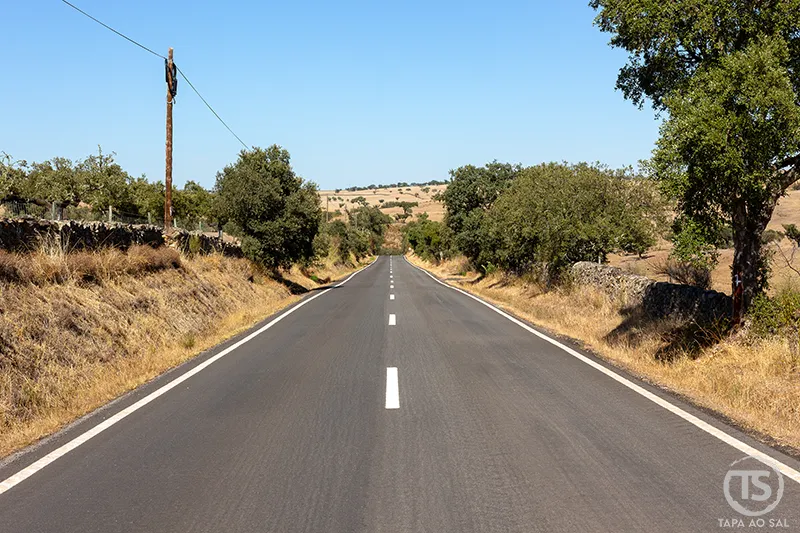
Without a car, the interior feels scarce. With one, it expands. It connects silent towns, forgotten castles, villages where doors still open slowly. It allows you to stop for no apparent reason. To follow a road because the name sounded right. To reach a viewpoint that was never planned.
Renting a car in Portugal makes complete sense when the journey passes through here. Because here, more than anywhere else, the road becomes the destination.
Serra da Estrela, Central and Northern Portugal
In the centre and the north, the landscape shifts in tone.
Mountains rise. Valleys narrow. Water becomes more present. Trails begin where the road ends. Small villages hide within folds of terrain. And the light changes throughout the day with a speed that asks for mobility.
In Serra da Estrela, the car connects altitudes. It allows you to climb into cold air and descend into green valleys. To cross pastures, lagoons, stone villages. To stop because the mist has opened. Or because the view has.
Further north, between rivers and mountain ranges, the same rhythm repeats: secondary roads, isolated churches, ancient bridges, natural parks where the scale does not fit within fixed schedules.
Here, renting a car in Portugal gives continuity to the landscape.
Madeira and the Açores Islands
On the islands, the car becomes almost an extension of the body.
In Madeira, roads climb along slopes, enter long tunnels, reappear suspended above ravines. Geography imposes choices — and each choice radically alters what you see.
In the Açores, the design feels different. More circular. More open. Yet equally dependent on autonomy. Lagoons, fajãs, viewpoints, thermal areas, trails, pastures. Everything exists. Little lies side by side.
Renting a car on the islands is not only about movement. It is independence. It allows you to stay when the weather changes. To go when the sky clears. To return when the light asks for something else.
That is why, in these regions, car rental in Portugal does not enter as a service. It enters as a condition.
So that the country stops being a collection of places —
and becomes a territory lived between them.
Driving in Portugal: What Travellers Should Know Before Renting a Car
There is a subtle moment when the road stops being scenery and becomes language.
Road signs begin to make sense.
The rhythm of traffic settles into place.
The body learns the shape of the curves.
Driving in Portugal is, most of the time, a calm gesture. Distances are manageable, landscapes varied, and the shift between modern motorways and older roads happens without friction. Even so, for those arriving from abroad, there are small particularities that help transform uncertainty into confidence.
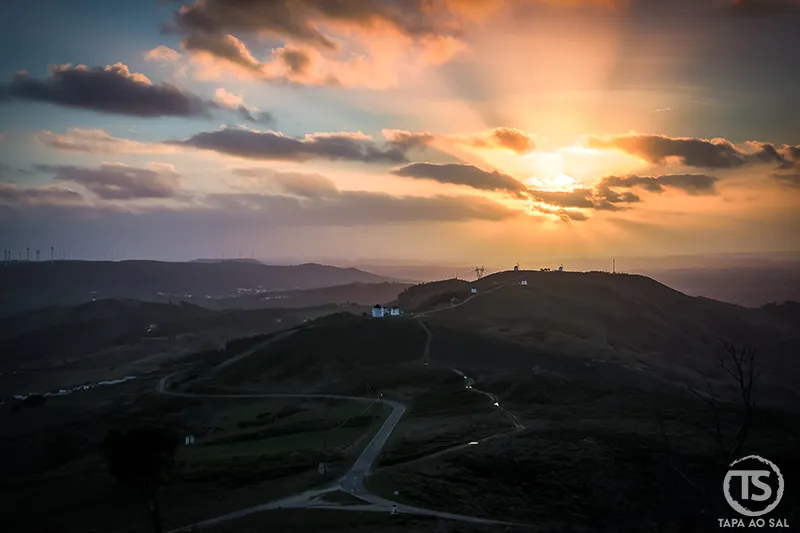
Roads, Tolls and Fuel When Renting a Car in Portugal
Portugal is a country stitched together by roads.
Motorways cross it with efficiency: wide, well maintained, designed for fast movement. Many are tolled. Some operate without visible booths — the former SCUT routes where payment is electronic. For those renting a car in Portugal, this usually means a small device linked to the licence plate or windscreen, recording passages automatically.
This system is called Via Verde, and it makes the journey more fluid: no stopping, no immediate payment, no interruption of movement. Later, the value appears itemised.
Beyond the motorways, national roads emerge. Routes that cross villages, follow rivers, climb mountains, descend into valleys. It is here that the country reveals itself more fully. They are also slower, narrower, more unpredictable — and often free.
Fuel is easy to find. In cities, towns and crossroads. On motorways, in large service areas where travellers and local routines blend together. Prices vary, but running out is rarely a concern. It is only wise not to let the tank fall into complete silence when the journey enters the interior.
Parking in Portugal’s Historic Centres
In older cities, driving takes on a different tone.
Streets narrow. Cobbled surfaces become slippery after rain. Walls draw closer. Here, more than moving forward, it is about knowing where to stop.
Many historic centres restrict car access. Others allow it, but ask for patience. Finding parking within the oldest areas becomes increasingly difficult — and not always desirable. Underground garages, surface parking, paid zones and peripheral lots have become a natural part of urban life.
Parking outside the core and entering on foot is often the lightest way to visit. The car stays behind. The city opens.
This distinction also helps decide when to rent. On trips centred almost entirely in cities, a car can feel like a burden. When the journey expands, it becomes a tool again.
Driving Style and Road Safety in Portugal
Driving style in Portugal varies. There are places where movement is slow. Others where the rhythm accelerates. Overall, it does not differ greatly from what is found in other European countries: clear limits, present signage, well-maintained roads.
In rural areas, it helps to expect the unexpected. A tractor. A flock of sheep. A car stopped in the middle of the road for a conversation. In the mountains, sudden changes in weather. Along the coast, strong winds. In historic centres, blind curves.
None of this asks for tension. It asks for attention.
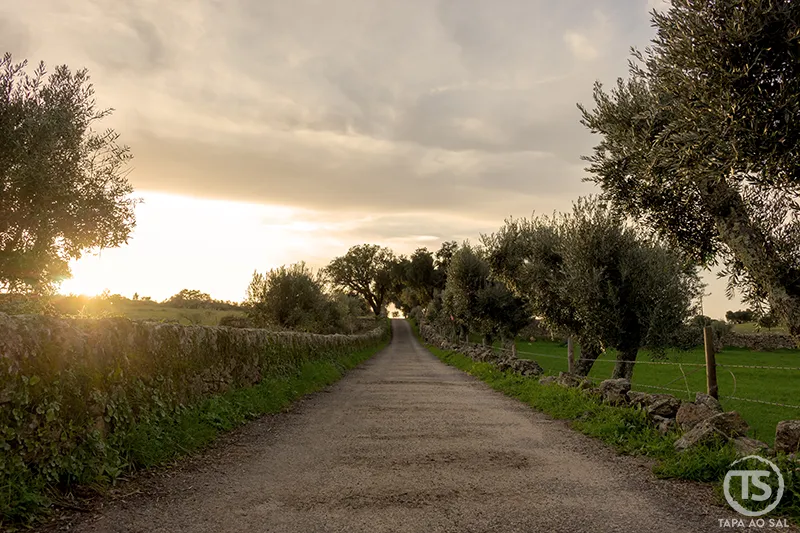
Renting a car in Portugal does not require complex adaptation. It simply asks for time. Respect the road. Respect the place. Drive as someone passing through, not someone invading.
When that adjustment happens, the road stops being a logistical obstacle. It becomes the thread that connects everything else.
And that is when the journey truly begins to move.
Common mistakes when renting a car (and how to avoid them)
Almost all mistakes when renting a car in Portugal happen away from the road.
They happen in a rush.
In fatigue.
In that moment when the journey hasn’t started yet, but the body already wants it to begin.
They are small mistakes. Quiet ones. They make no noise when they appear, yet gain weight days later, when you are already too far away to turn back.
Before the booking
There is a type of mistake that begins at home, in front of a screen.
Dates mixed up. Times chosen approximately. Pick-up and drop-off locations that seem close on a map but feel very different in reality. And above all, conditions accepted without being fully read.
Here, the most common error is confusing price with proposal. Seeing a low value and assuming everything else will be simple. Not checking the excess. Not understanding what type of insurance is included. Ignoring fuel policies. Forgetting that a delayed flight is different from a late pick-up.
Avoiding these missteps has less to do with distrust and more with attention. Reading as if preparing a route. Understanding where it begins. Where it ends. What is included along the way.
Renting a car in Portugal works best when the booking is not an impulse, but a decision.
At pick-up
In the parking area, the most frequent mistake is speed.
The car is there. The key has been handed over. The engine wants to start. And all you want is to leave.
That is precisely when it helps to pause.
Look at the bodywork in real light. Check the corners. The wheels. The windscreen. Photograph small marks, even the ones that seem irrelevant. Confirm whether they are registered. Notice the fuel level. Read what you sign.
It is not an act of distrust. It is an act of clarity. Because renting a car in Portugal, like anywhere else, relies on records. And what is not recorded becomes memory. And memory, when you return, does not carry the same weight.
Here too, timing matters. A pick-up outside the agreed window can turn into negotiation. A delay communicated in advance is almost always received differently.
At return
The road almost always ends in a parking area.
The body is still full of images.
The car, full of kilometres.
And time returns to being measured in minutes.
One of the most common mistakes happens here: arriving too late. Returning the car with a different fuel level than agreed. Leaving without confirming the vehicle’s final condition. Small details that, when ignored, extend the journey beyond what you intended.
Whenever possible, it helps to return in daylight. With time. With enough mental space to follow the inspection. Keep the receipts. Take photographs. Not out of fear, but out of closure.
Because returning a car is closing a cycle. And like every ending, it deserves a moment of attention.
Mistakes in car rental are rarely serious. But they are almost always avoidable.
With reading.
With pause.
With presence.
All the things that, curiously, also make a good journey.
Planning Your Trip Around Renting a Car in Portugal
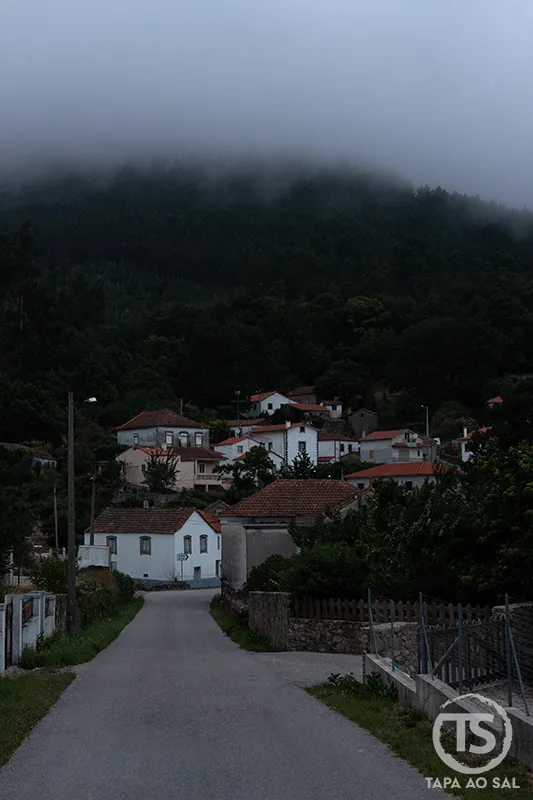
Some journeys begin with a destination.
Others begin with a line on the map.
A line that connects places.
A set of possible roads.
A simple question: what if we went this way?
When the car enters the planning, the journey stops being just a place to arrive at and becomes a territory to cross. Car rental in Portugal fits best not at the end of the organisation, but at the beginning — when everything is still flexible, when days can still bend, when detours are promises rather than delays.
It is at this stage that it makes sense to weave the car into the itineraries.
To think not only about where to stay, but how those places connect. What kind of road links them. What landscapes unfold between one point and another. An Algarve itinerary is not built only from beaches, but from the way you reach them. A route through the interior gains another depth when you realise that one village lies thirty minutes from a castle, and that between them there is a reservoir that was never part of the plan.
When opening a map of “what to visit in Portugal”, the country appears like an archipelago of experiences. The car is what gives them continuity. It allows a list to become a route. A regional guide to become a real journey. A collection of articles to become a personal narrative.
This is how the Tapa ao Sal guides are imagined: not as isolated blocks, but as parts of the same territory. One article leads to another. One mountain draws closer to a village. One beach extends into a road. When planning, looking at these contents as if they were an atlas helps reveal where the car truly adds value — where it creates possibilities, where it frees time instead of consuming it.
It is also at this stage that road trips begin to take shape. Not as fixed plans, but as sketches. Three days in the south. Two in the interior. A slow crossing through the centre. A return through the north. With each choice, the car adjusts: the duration of the rental, the pick-up location, the type of vehicle.
When rental enters here, it stops being a technical detail and becomes a tool of construction. It helps shape days that do not depend on rigid schedules. It allows the journey to grow organically. A route can stretch because the road felt right. A plan can change because a place asked for it.
Planning with the car in mind is, in essence, planning with space.
With what lies between the points.
With what is discovered in the interval.
With everything that turns a journey into a succession of arrivals, rather than a collection of destinations.
Conclusion: When the Road Becomes Part of the Journey
There is a moment — almost always quiet — when the journey stops fitting inside a plan.
It happens when the road stretches without urgency.
When the light changes and no one feels the need to arrive.
When the map no longer confirms, but simply suggests.
That is when renting a car in Portugal stops being a practical gesture and becomes a choice of language. The decision to cross rather than merely visit. To connect places instead of adding them. To accept that the journey is not made only in marked points, but mostly in what happens between them.
A car does not create landscapes.
But it creates encounters with them.
It allows you to leave before the day has decided what it will be. To return when the mountain has cooled. To descend into the interior because an old sign called out. To climb toward the coast because the air changed. It allows mistakes — and, through them, discovery.
Preparing this part of the journey with time, understanding how car rental in Portugal works, when it makes sense, and which precautions avoid noise, is a way of protecting that space. A way of ensuring that when the road begins, it will not be interrupted by details that could have stayed at home.
If you are drawing your own journey, let the map open slowly. Explore the Tapa ao Sal guides. Cross regions. Connect ideas. Imagine routes.
And then, when the plan no longer fits entirely in your head, leave the rest to the road.
Because it is there that Portugal, almost always, reveals itself best.
Frequently asked questions about renting a car in Portugal
When planning a trip, the same practical, legitimate and often decisive questions tend to arise. Here we’ve gathered some of the most common questions about renting a car in Portugal, with clear answers to help you prepare this part of the journey with greater peace of mind.
What is the best time to rent a car in Portugal?
The best time depends largely on the type of trip, but as a general rule the low season (autumn, winter and early spring) offers more availability and more balanced prices. In summer, especially in the Algarve, in Lisbon, in Porto and in the islands, demand increases significantly, making early booking particularly important. Whenever possible, it’s worth securing the car a few weeks in advance.
Do I need a credit card to rent a car in Portugal?
In most companies, yes. A credit card is usually used to hold the deposit during the rental period. Some options exist without a credit card, but they are more limited, often come with specific conditions and are not always available at all airports or vehicle categories.
How much does it cost on average to rent a car in Portugal per day?
Prices vary considerably depending on the season, pick-up location and type of car. During low season it is possible to find more accessible rates, while in summer and holiday periods prices tend to rise, especially in tourist destinations and on the islands. More than a fixed price, the key is understanding that booking early and comparing options makes a real difference.
Is it safe to drive in Portugal?
In general, yes. Main roads are well maintained, signage is clear and driving style is not very different from other European countries. Outside motorways, especially inland and in historic areas, it’s advisable to drive more calmly, paying attention to narrow streets, animals on the road or sudden changes in conditions.
Is it worth renting a car in Lisbon or Porto?
If the trip is focused mainly on the cities, a car may not be essential and can even be less practical. However, if the idea is to explore the surroundings, travel inland, head towards the Algarve, the north or the centre of the country, renting a car in Lisbon or Porto becomes an excellent way to begin the journey with freedom.
Can I rent a car in the Azores and Madeira?
Yes, and in many cases it is highly recommended. In both the Azores and Madeira, a car makes it much easier to reach lagoons, viewpoints, trails, fajãs and areas less served by public transport. As availability can be limited, especially in summer, it’s advisable to book in advance.
Share your experience… inspire others to travel better.
Have you rented a car in Portugal? Was there something that surprised you, positively or negatively? A route that was only possible thanks to the freedom of the road? A mistake you would do differently today?
Tell us in the comments how your experience was. Your perspective can help other travellers prepare their journey better, avoid common pitfalls and discover Portugal with greater peace of mind.
If you found this guide useful, share it with someone planning a trip — especially those who want to explore beyond the cities, following secondary roads and unexpected detours.
Travel is not only about arriving. It is about choosing the road.
This article may contain affiliate links. If you make a booking through one of these links, Tapa ao Sal may receive a small commission at no additional cost to you.
Thank you for supporting this independent project, built with time, road and attention to detail.